A sticky film on cabinet handles, a dull stovetop, and dust clinging to the range hood are not signs that you have neglected your kitchen. Grease travels farther than most people expect every time you cook. Knowing how to remove kitchen grease buildup safely can restore the clean feel of the room without damaging painted cabinets, flooring, or appliances.
The key is to match the cleaner and method to the surface. Fresh grease usually lifts with a mild solution and a microfiber cloth. Older buildup may need more dwell time, gentle agitation, and a second pass. Reaching for the harshest product first can create a different problem, especially on wood finishes, natural stone, and stainless steel.
Why Kitchen Grease Builds Up So Quickly
Cooking oils become airborne in tiny droplets when food is sautéed, fried, roasted, or simmered. Those droplets settle on nearby cabinets, walls, backsplashes, light fixtures, and floors. As the grease cools, it catches dust, pet hair, and everyday kitchen debris. What starts as a light film can become tacky and yellowed over time.
The area around the range is usually the most obvious trouble spot, but grease can also collect on the tops of cabinets, refrigerator handles, microwave controls, pantry doors, and the underside of upper cabinets. Homes with active kitchens, gas ranges, or limited ventilation may see buildup faster. A working range hood helps, but it still needs regular filter cleaning to do its job well.
Gather the Right Supplies Before You Start
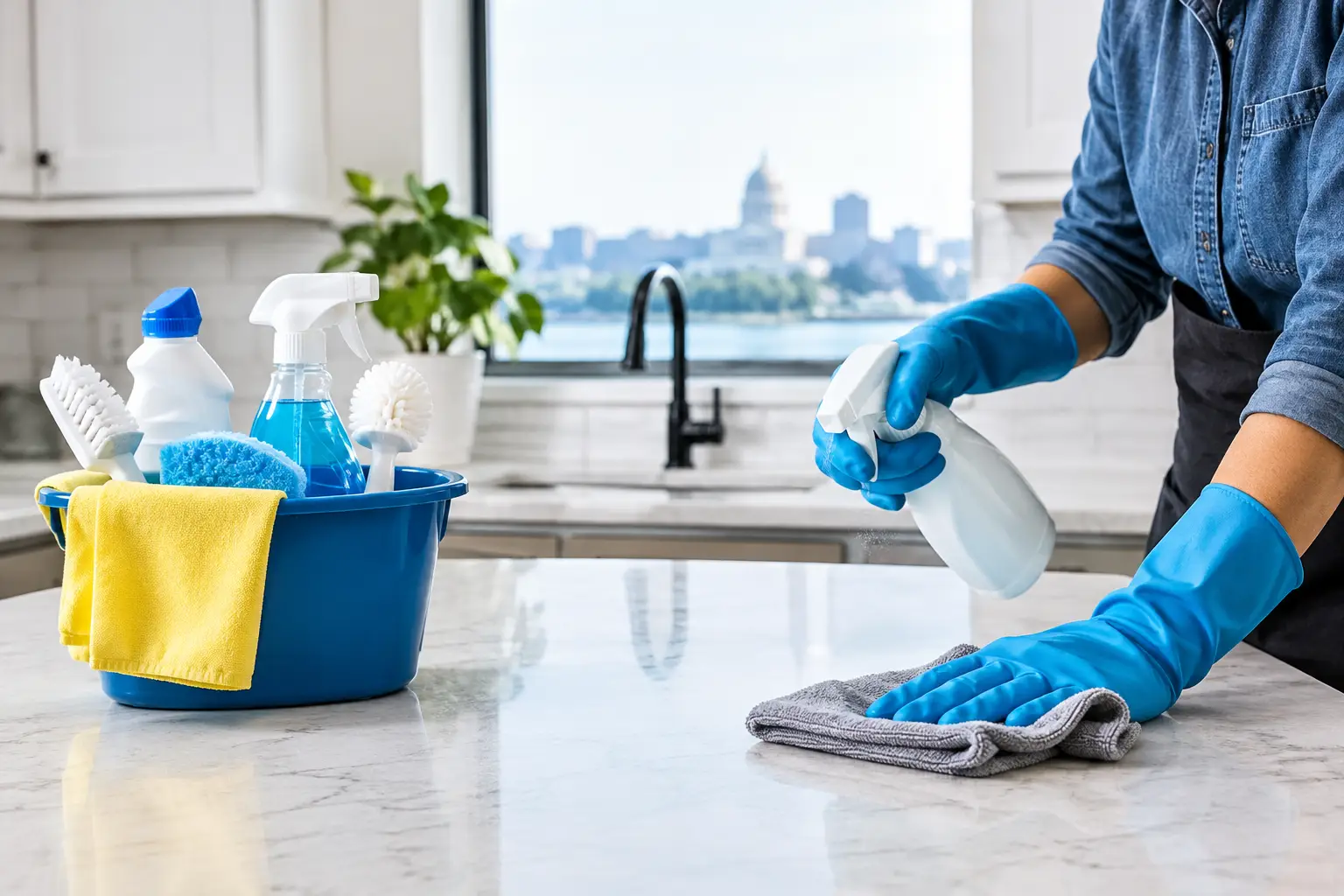
A simple, non-toxic approach works well for most routine kitchen cleaning. Prepare warm water, a few drops of mild dish soap, clean microfiber cloths, a soft sponge, a small bowl, and a dry towel. For stubborn spots, baking soda can provide light abrasion when used carefully.
Avoid using steel wool, abrasive scouring powders, or harsh oven cleaner on cabinets and finished surfaces. They can scratch protective coatings, dull sheen, strip paint, or leave permanent marks. Strong degreasers may be appropriate for certain commercial-grade surfaces, but they should always be used according to the manufacturer’s directions and with proper ventilation.
Before treating a large or visible area, test your cleaning solution in an inconspicuous spot. This matters most for painted cabinetry, wood veneer, laminate, specialty finishes, and natural stone countertops.
How to Remove Kitchen Grease Buildup From Cabinets
Cabinets deserve a gentle approach because finishes vary widely. Start by removing loose crumbs and dust with a dry microfiber cloth. If you wet grease and dust together immediately, you can spread the grime into a larger smear.
Dip a microfiber cloth into warm, soapy water, then wring it out very well. The cloth should be damp, not dripping. Wipe one small section at a time, working from the top of the cabinet downward. Pay extra attention to handles, pulls, edges near the stove, and the narrow strip beneath upper cabinets.
For sticky buildup that remains, apply a small amount of baking soda paste to a soft, damp cloth. Make the paste with baking soda and just enough water to create a spreadable consistency. Rub very lightly in the direction of the wood grain or surface pattern, then wipe the area with a clean damp cloth. Dry immediately with a towel.
Do not let water sit on cabinet seams, hinges, or unfinished edges. Excess moisture can swell particleboard, loosen veneer, and affect painted finishes. If your cabinets have a delicate or custom finish, a professional cleaning consultation may be the safer choice than repeated scrubbing.
Clean the Stovetop, Backsplash, and Range Hood
Turn off the cooktop and let all surfaces cool completely. Remove grates, burner caps, and drip pans if your appliance instructions allow it. Soak removable parts in warm water with dish soap while you clean the main surface.
For a glass or ceramic cooktop, use a cleaner approved for that surface and a soft cloth. Avoid abrasive pads, even when burned-on grease is frustrating. A plastic scraper designed for cooktops can help loosen residue without scratching, but it should be used at the correct angle and only on a cool surface.
Backsplashes are often easier to clean than cabinets, but grout needs special attention. Wipe tile with warm, soapy water, then rinse with a separate damp cloth so cleaner does not dry into the grout lines. If grease has settled in grout, use a soft brush and mild cleaner rather than an aggressive abrasive product.
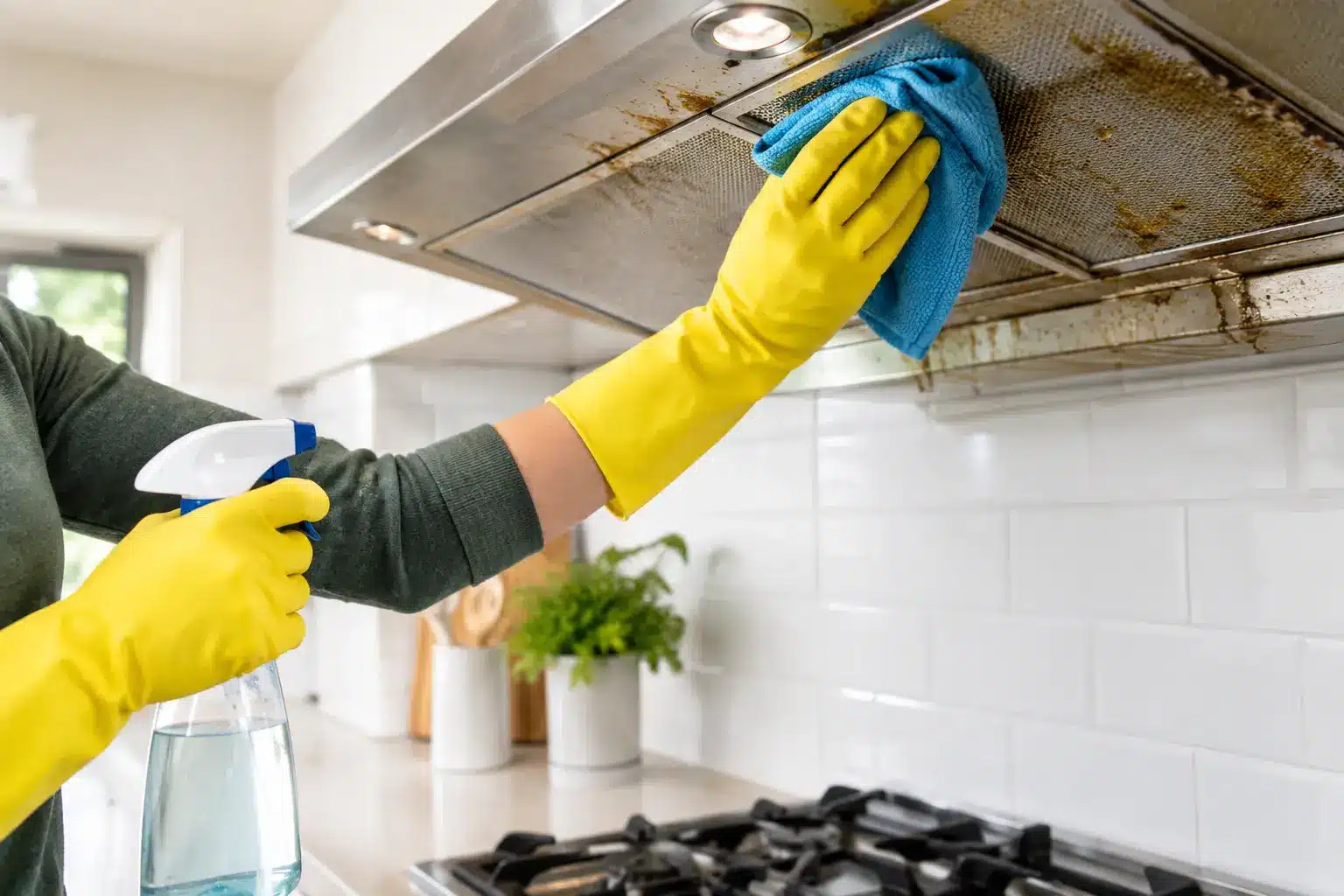
The range hood is often the overlooked source of recurring kitchen grease. Wipe the exterior with a damp, soapy microfiber cloth, following the direction of the grain on stainless steel. Then clean the hood filters according to the manufacturer’s instructions. Many metal mesh filters can be soaked in hot, soapy water and gently brushed, but not every filter is designed for the same treatment. A clean filter improves ventilation and reduces the amount of grease that settles across the kitchen.
Do Not Forget Handles, Appliances, and Floors
Grease buildup tends to show up where hands regularly touch surfaces. Wipe refrigerator handles, microwave buttons, dishwasher controls, faucet handles, and light switches with a lightly damp cloth and mild cleaner. For electronic controls, spray the cloth rather than the appliance itself to avoid moisture getting into openings.
Kitchen floors collect grease through splatter and tracked-in residue. Vacuum or sweep first, especially along baseboards and beneath the stove. Then mop using a cleaner appropriate for your flooring type. Too much water can damage hardwood and laminate, while the wrong product can leave a slippery film on tile or luxury vinyl.
If the floor feels tacky after mopping, the problem may be leftover cleaner rather than remaining grease. Rinse with a clean, damp mop and dry the area thoroughly. A clean floor should feel smooth underfoot, not slick or sticky.
A Routine That Prevents Heavy Grease Buildup
The easiest way to remove grease is to keep it from becoming a thick layer. After cooking foods that splatter, wipe the cooktop, backsplash, and counter edges once they are cool. A quick wipe takes less time than a deep scrub later and helps preserve the finish on nearby cabinets.
Once a week, wipe cabinet handles, appliance fronts, and the range hood exterior. Every month, clean the hood filter and check the tops of cabinets, especially if you cook frequently. The right timing depends on your household. A family that cooks most nights may need more frequent attention than a household that relies mostly on simple meals or takeout.
Good ventilation also makes a meaningful difference. Turn on the range hood when cooking, even for tasks that do not seem especially greasy. If possible, run it for a few minutes after cooking to help clear lingering airborne oil.
When Professional Help Makes Sense
Some grease problems are larger than a weekend cleaning project. Heavy buildup after a move, years of residue on cabinet tops, grease around commercial cooking equipment, or post-construction dust mixed with kitchen film can require a more detailed plan. Property managers and business operators may also need cleaning scheduled around residents, employees, or customer traffic.
A professional team can evaluate the surfaces involved, use appropriate products, and build a customized scope around the kitchen and surrounding spaces. For Madison-area homes and businesses, Class A Cleaning uses green cleaning products that are non-toxic, animal-testing-free, and selected with families, pets, and workplaces in mind. Screened, insured, safety-trained staff can help bring the same careful attention to a one-time deep clean or an ongoing service plan.
A kitchen does not need to look showroom-perfect to feel cared for. Wipe the surfaces that work hardest, give grease time to soften before scrubbing, and choose gentle methods that protect the materials in your home. When the buildup feels beyond your available time or energy, scheduling help is a practical way to get your kitchen back to a cleaner, more comfortable place to gather.