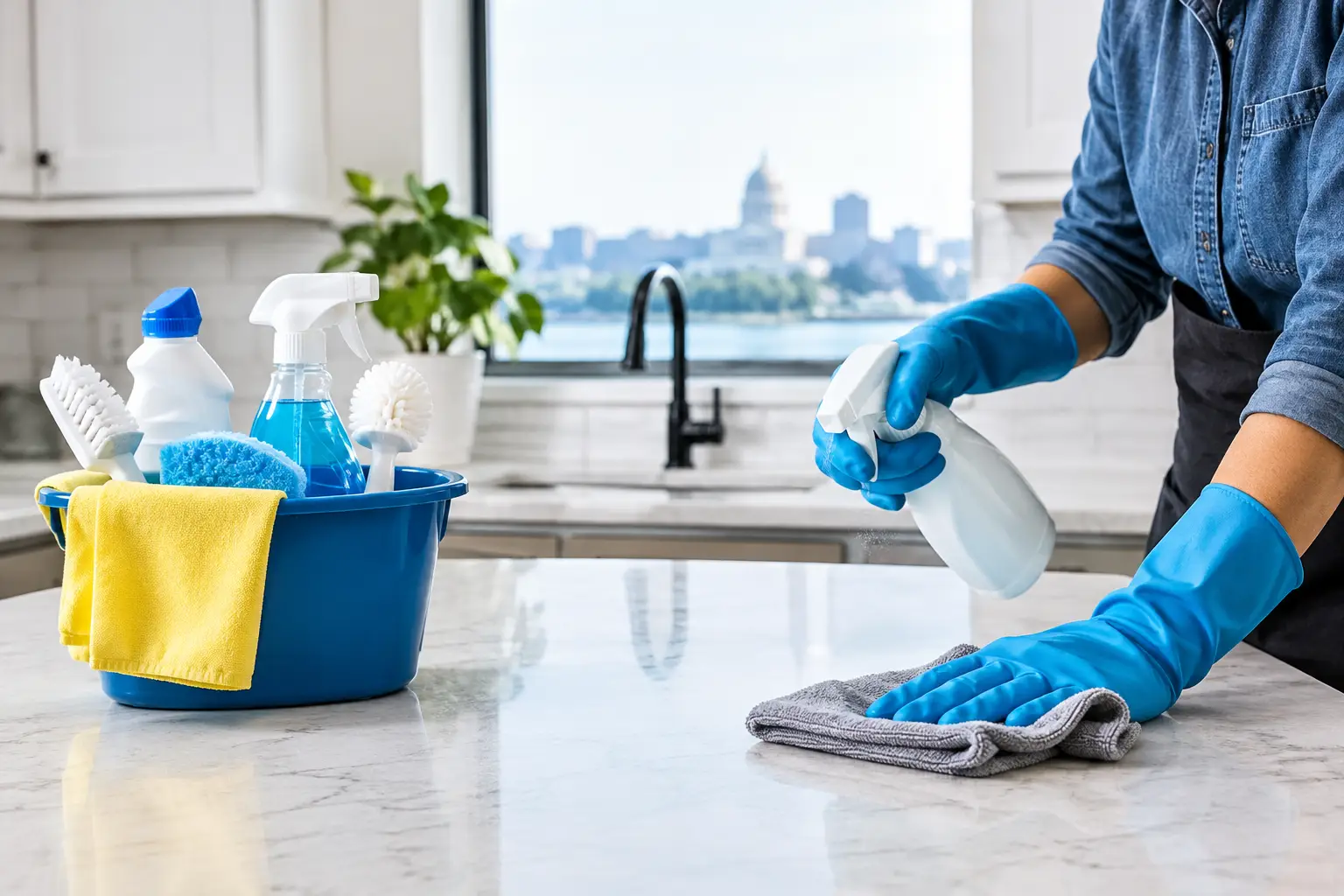
A vacant unit can look ready at first glance, yet still hold the details that shape a new resident’s first impression: grease inside the oven, dust along baseboards, fingerprints on switch plates, or debris left in a cabinet. This property turnover cleaning guide helps Madison-area landlords, property managers, and residents prepare a home, apartment, or commercial space for its next occupant with a clear, practical plan.
Turnover cleaning is more than a quick reset between leases. It is an opportunity to document a property’s condition, address issues before they become bigger repairs, and present a clean space that feels cared for from the moment the door opens. A well-managed turnover can reduce vacancy time, support tenant satisfaction, and help protect the long-term condition of the property.
Start With a Walk-Through Before Cleaning
Cleaning goes faster when the team knows exactly what needs attention. Before bringing in supplies or beginning work, walk through the empty property room by room. Take dated photos and note damage, maintenance needs, leftover belongings, and areas that need extra cleaning.
Look beyond the obvious floors and countertops. Open cabinets, drawers, closets, appliances, and blinds. Check window tracks, light fixtures, vents, doors, and trim. A unit may be generally clean but still need focused work in the places a new resident will notice while unpacking.
This first inspection also helps separate cleaning from maintenance. A stained shower may need deep cleaning, while loose caulk, a leaking faucet, or a damaged cabinet hinge needs repair. Handling these items as separate tasks prevents a cleaning appointment from being delayed by work that requires a maintenance professional.
Create a Scope That Matches the Property
Not every turnover needs the same level of service. A short-term rental between guests may need a detailed reset, fresh linens, and a quick inspection for supplies. An apartment after a year-long lease may require a deeper clean, wall spot cleaning, appliance detailing, and attention to accumulated buildup.
A property that has been vacant during a renovation needs a different approach altogether. Post-construction dust can settle in vents, cabinets, window tracks, and on freshly installed surfaces. It should be removed carefully rather than spread around with a dry cloth or ordinary sweeping.
A written scope keeps expectations clear. Identify which rooms are included, whether interior windows or appliance interiors are part of the service, and who handles trash removal, carpet cleaning, repairs, and paint touch-ups. This protects the schedule and avoids last-minute confusion.
Property Turnover Cleaning Guide: Work From High to Low
A reliable turnover process follows the same sequence every time. Start with high surfaces and work down so dust and debris do not fall onto an already-clean floor. Clean dry areas before wet areas when possible, then finish with floors and a final inspection.
In living areas and bedrooms, remove cobwebs, dust ceiling fans and vents, wipe doors, trim, switch plates, and reachable surfaces. Clean inside closets and drawers, including shelves and rods. Window sills and tracks deserve attention, especially in Wisconsin, where seasonal weather can bring in dirt, salt residue, and pollen.
In kitchens, cleanliness is especially visible. Degrease the stovetop and range hood, clean the microwave inside and out, wipe cabinets and drawers, sanitize counters, and clean the sink and faucet. Pull out movable appliances when appropriate to remove crumbs and buildup behind and underneath them. The oven and refrigerator should be addressed according to the agreed scope, since these jobs can add meaningful time to a turnover.
Bathrooms need both cleaning and close inspection. Remove soap residue from showers and tubs, clean tile and grout, disinfect the toilet, polish fixtures, and wipe cabinets inside and out. Check around the toilet base, behind doors, and along floor edges. These are small areas, but overlooking them can make an otherwise clean bathroom feel unfinished.
Finish by vacuuming carpets and cleaning hard floors. Use products and methods that suit the floor type. Excess water can damage some laminate, wood, and luxury vinyl surfaces, while harsh products can dull finishes. Green cleaning products can be an excellent choice for occupied homes and family-oriented rentals when they are selected for the surface and task at hand.
A Room-by-Room Turnover Standard
For a consistent result across multiple units, use a repeatable inspection standard. The following areas should be included in most turnover cleaning plans:
- Kitchens: appliance exteriors and interiors as scheduled, cabinets, counters, sinks, backsplashes, and floors.
- Bathrooms: toilets, showers or tubs, sinks, mirrors, fixtures, cabinets, tile, and floors.
- Living areas and bedrooms: dusting, ledges, trim, closets, doors, light switches, and flooring.
- Entryways and utility areas: door frames, vents, laundry areas, accessible surfaces, and floors.
- Final touchpoints: trash removal, odor check, fingerprints, streak-free mirrors, and a last walk-through.
The goal is not simply to make a unit look clean under bright lights. It is to make every resident-facing surface feel ready for use.
Schedule Cleaning at the Right Point in the Turnover
Timing has a direct impact on cleaning quality. The best time for a detailed turnover cleaning is after the outgoing tenant has removed all belongings and after major repairs are complete, but before photos, showings, or move-in day.
If painters, flooring installers, or maintenance crews must return after the cleaning, plan for a final touch-up. Even careful work can leave dust, footprints, or fingerprints. It is often more efficient to schedule a full clean after the bulk of the work and reserve a shorter final service for the day before keys change hands.
For occupied move-outs, build in realistic time. Tenants may still be loading vehicles on the last day of a lease, and cleaners need unobstructed access to do thorough work. When a vacancy window is tight, communicate the access plan early and make sure utilities, especially water and electricity, remain on through the cleaning appointment.
Protect People, Surfaces, and Your Property
A turnover crew should be able to clean thoroughly without creating new problems. That means using appropriate products, following safe procedures, and understanding how to handle different materials. Mixing cleaning chemicals, using abrasive tools on delicate finishes, or rushing through a wet floor can create unnecessary risk.
For property managers and owners, insured service matters. So do screened employees, workers’ compensation coverage, and ongoing safety education. These details are not merely administrative. They help protect the people working in the unit and provide confidence when professionals are cleaning private homes, apartments, offices, or common areas.
Class A Cleaning uses an in-house green cleaning program with non-toxic, animal-testing-free products that are selected with families, pets, and commercial environments in mind. Product choice still depends on the job. A cleaner that works well for everyday bathroom upkeep may not be the right answer for mineral buildup, construction residue, or a heavily soiled oven.
Inspect the Finished Unit Like a New Resident
Once cleaning is complete, do not inspect only from the doorway. Walk through slowly as someone seeing the space for the first time. Turn on lights, open cabinets, test the appearance of mirrors from different angles, and look at floors near windows and baseboards.
Pay attention to smell as well. Strong fragrances can cover an odor without solving its source. A clean property should smell neutral and fresh, not heavily perfumed. If an odor remains, identify whether it is coming from drains, carpet, appliances, trash areas, moisture, or a ventilation issue before the next move-in.
This is also the time to restock items that belong with the unit, such as smoke detector batteries, air filters, or common-area supplies. Cleaning cannot replace maintenance, but a final walk-through gives you one more chance to catch a detail that could affect the new occupant’s experience.
When to Bring in Professional Turnover Cleaning
A professional cleaning team is especially helpful when the property needs to be turned quickly, the previous condition is heavier than expected, or you manage multiple units with recurring turnover needs. It can also be a practical choice after construction work, before listing photos, or when a resident needs help meeting move-out expectations.
The right service should offer a customized scope rather than treating every vacancy the same. Ask what is included, how special requests are handled, whether the team is insured, and how scheduling works around repairs and move-in dates. Clear answers make it easier to plan with confidence.
A clean turnover sets a respectful tone before a tenant, homeowner, employee, or customer spends their first hour in the space. Give the work enough time, inspect the details, and schedule your cleaning today so the next person opens the door to a property that is truly ready.
Content Disclaimer: This article is part of Class A’s ongoing SEO and digital marketing campaign. We make every effort to keep the information accurate and current. If you find outdated or incorrect information, please contact us so we can review and update it.