A restroom can look tidy at 8:00 a.m. and still create a poor impression by lunchtime. In a busy office, high-touch surfaces, splash zones, overflowing trash, and empty soap dispensers add up quickly. Knowing how to sanitize office bathrooms means building a consistent process that removes soil first, uses disinfectants correctly, and keeps the room comfortable for every employee and guest who walks in.
Start With Cleaning, Then Sanitize
Cleaning and sanitizing are related, but they are not the same task. Cleaning removes visible dirt, residue, and many germs from a surface. Sanitizing reduces germs to safer levels. Disinfecting is generally reserved for killing a broader range of germs on hard, nonporous surfaces, particularly after illness concerns or contamination.
A disinfectant cannot work as intended when it is sprayed over grime, soap scum, or toilet residue. That is why restrooms should be cleaned first with an appropriate cleaner, then sanitized or disinfected according to the product label. Skipping that first step may save a few minutes, but it can leave surfaces looking dull and less hygienic.
The exact products you choose depend on the facility, surface materials, employee sensitivities, and your company’s cleaning policy. Many offices prefer non-toxic, animal-testing-free products where appropriate, especially in shared workplaces. Green cleaning can support a more comfortable indoor environment, but “green” should never mean guessing at product performance. Use products designed for the task and follow every label direction.
Build a Bathroom Sanitizing Routine That Works
The best office bathroom routine is systematic. It prevents cross-contamination, makes missed details less likely, and gives employees a restroom they can rely on throughout the day.
Begin with preparation and safety
Post a wet-floor sign before mopping or working with liquids. Put on the recommended personal protective equipment, which may include gloves and eye protection depending on the products used. Never mix cleaning chemicals. Combining products such as bleach and ammonia can produce dangerous fumes.
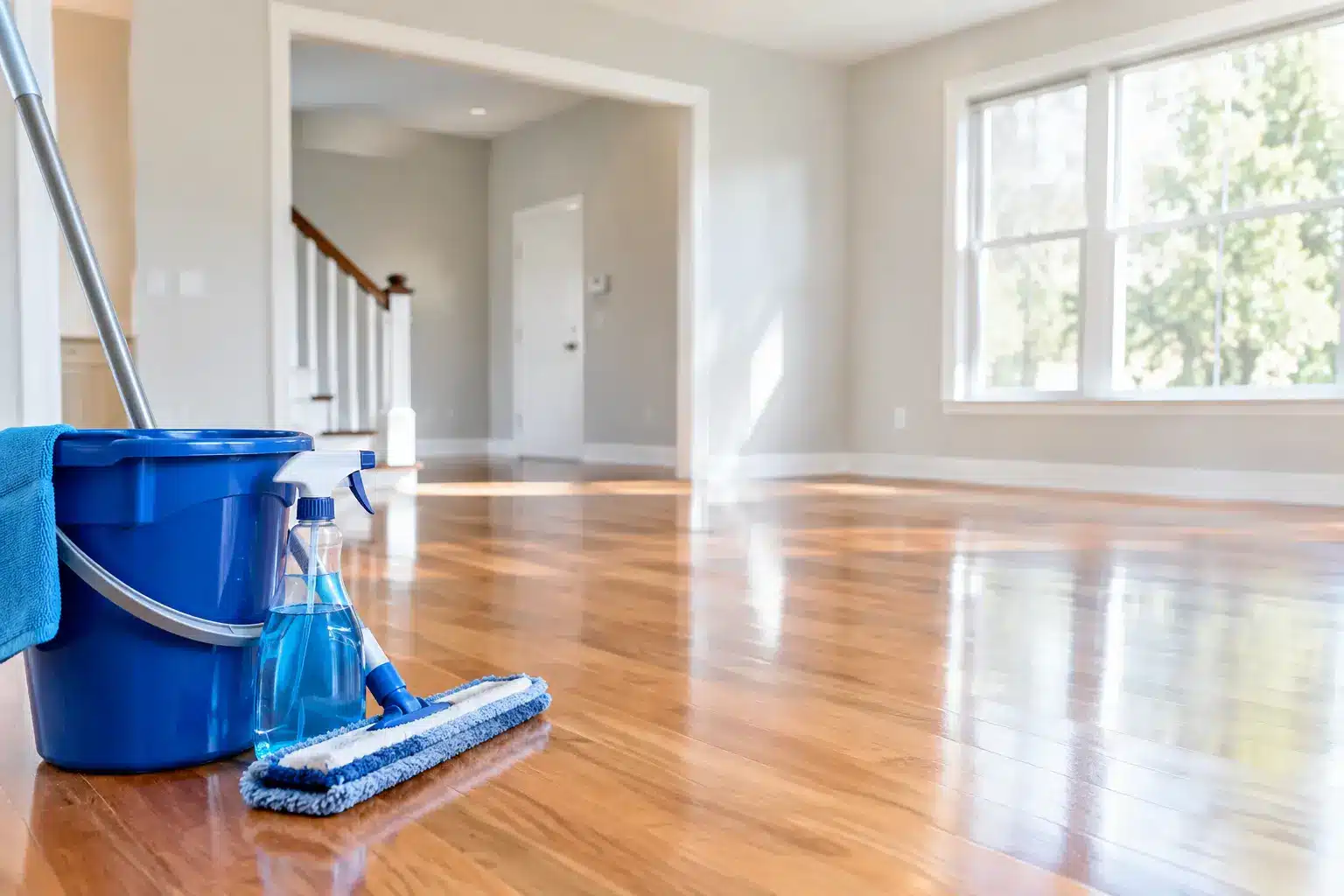
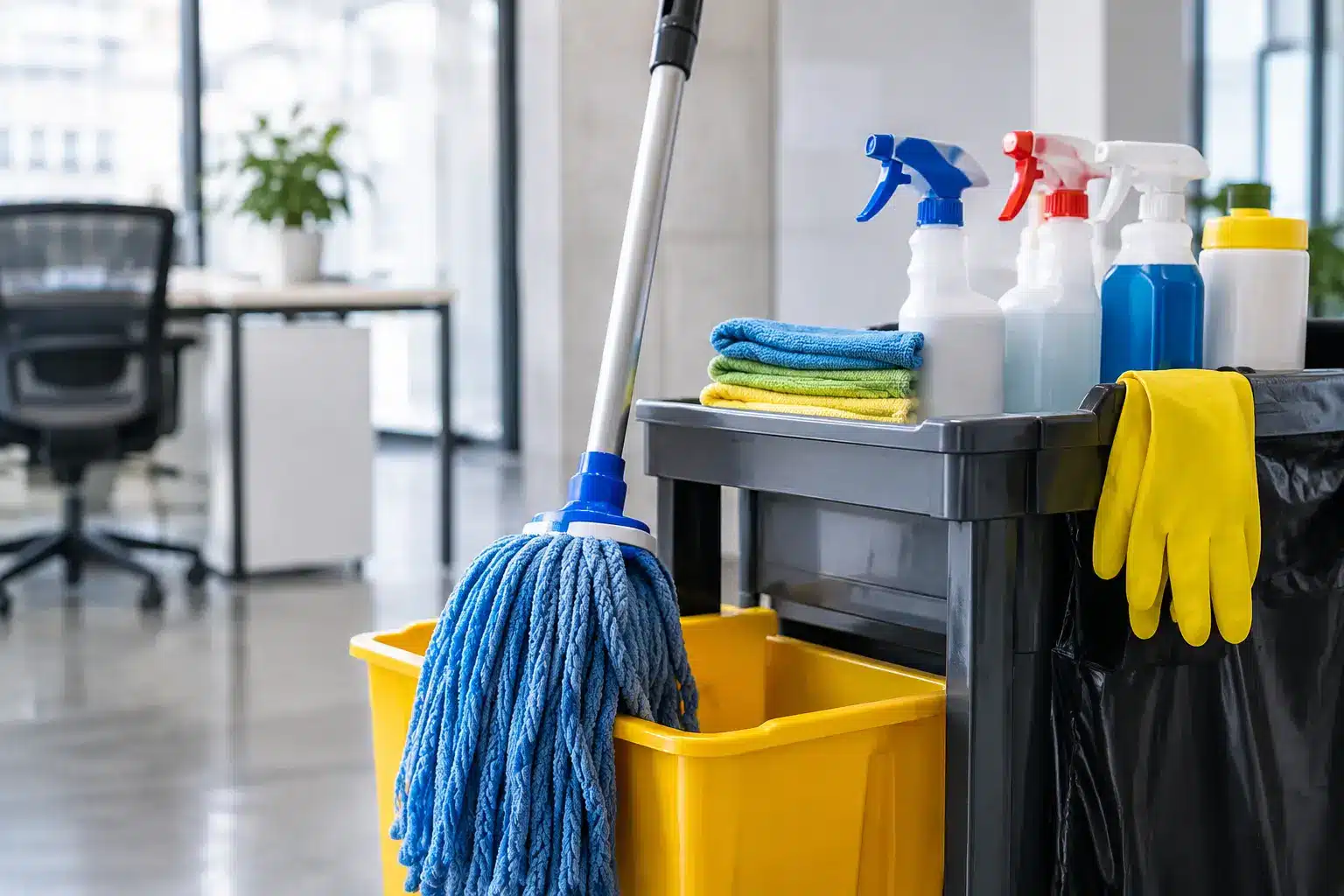
Bring clean microfiber cloths, a restroom-only mop or floor tool, liners, cleaner, sanitizer or disinfectant, toilet bowl cleaner, and replacement supplies into the room before you begin. Color-coded cloths can be helpful: one color for mirrors and fixtures, another for toilets and surrounding areas. The goal is to avoid taking germs from a toilet handle to a sink faucet.
Remove trash and restock essentials
Empty waste receptacles first, replace liners, and check for debris around and behind the bins. Then restock toilet paper, hand towels, facial tissue if provided, hand soap, and menstrual hygiene products. Inspect dispensers for drips or buildup, and wipe their exterior surfaces.
This step matters more than it may seem. A clean sink does little for a workplace if the soap dispenser is empty. Reliable supplies encourage good hand hygiene and show employees that their daily needs are being taken seriously.
Clean from high to low and from clean to dirty
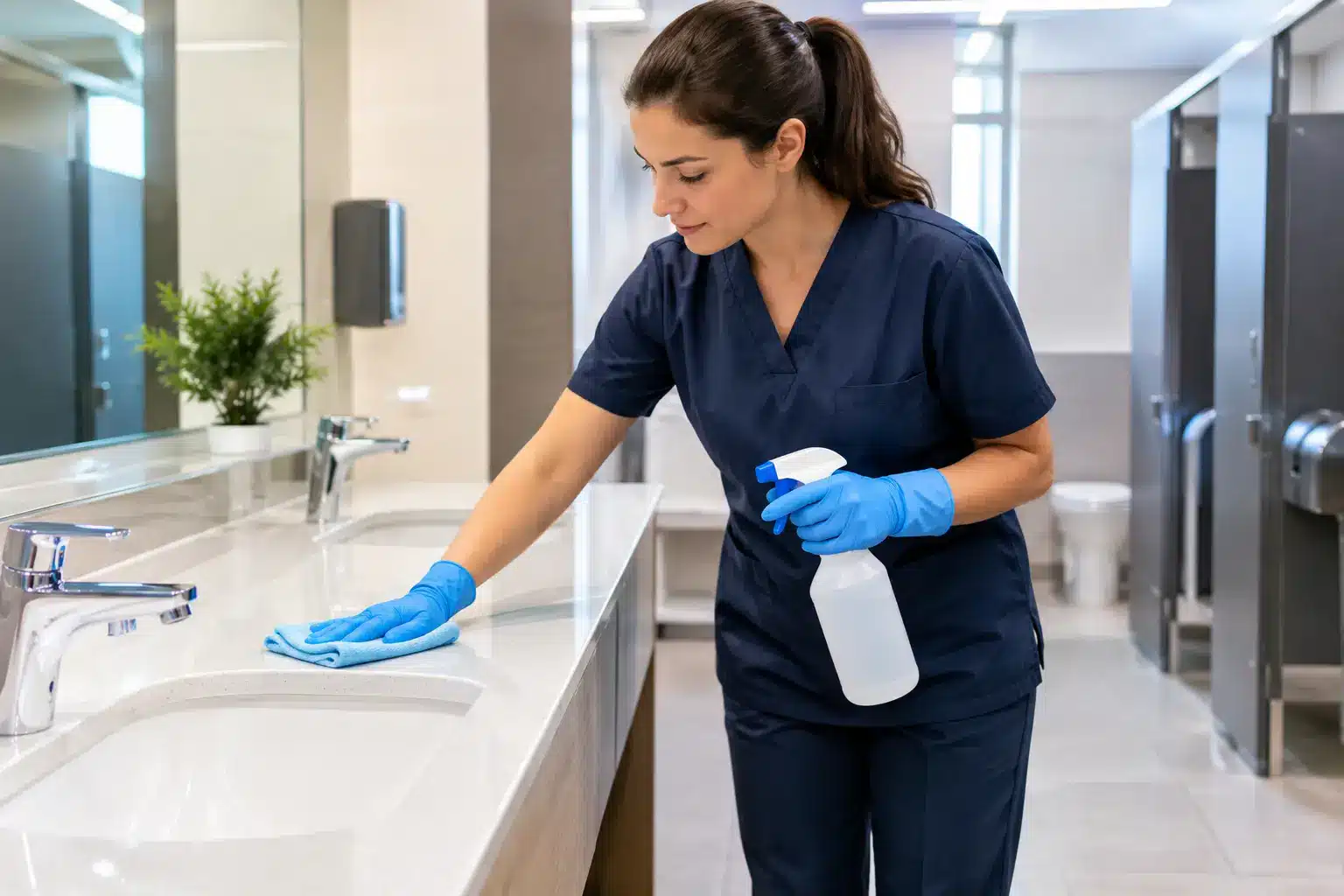
Start with mirrors, light switches, door handles, stall locks, dispensers, faucets, counter edges, and sink basins. Clean mirrors with a glass-safe product and a lint-free cloth. For sinks, pay close attention to drains, faucet bases, handles, and the underside of countertops where splashes can collect.
Next, clean and sanitize the outside of toilets and urinals, including flush handles or buttons, seat covers, hinges, lids, exterior bowls, partitions, and nearby grab bars. Use a dedicated toilet bowl cleaner inside the bowl, allow it to sit as directed, scrub under the rim, and flush. Use separate tools for toilet interiors and never use them on other bathroom surfaces.
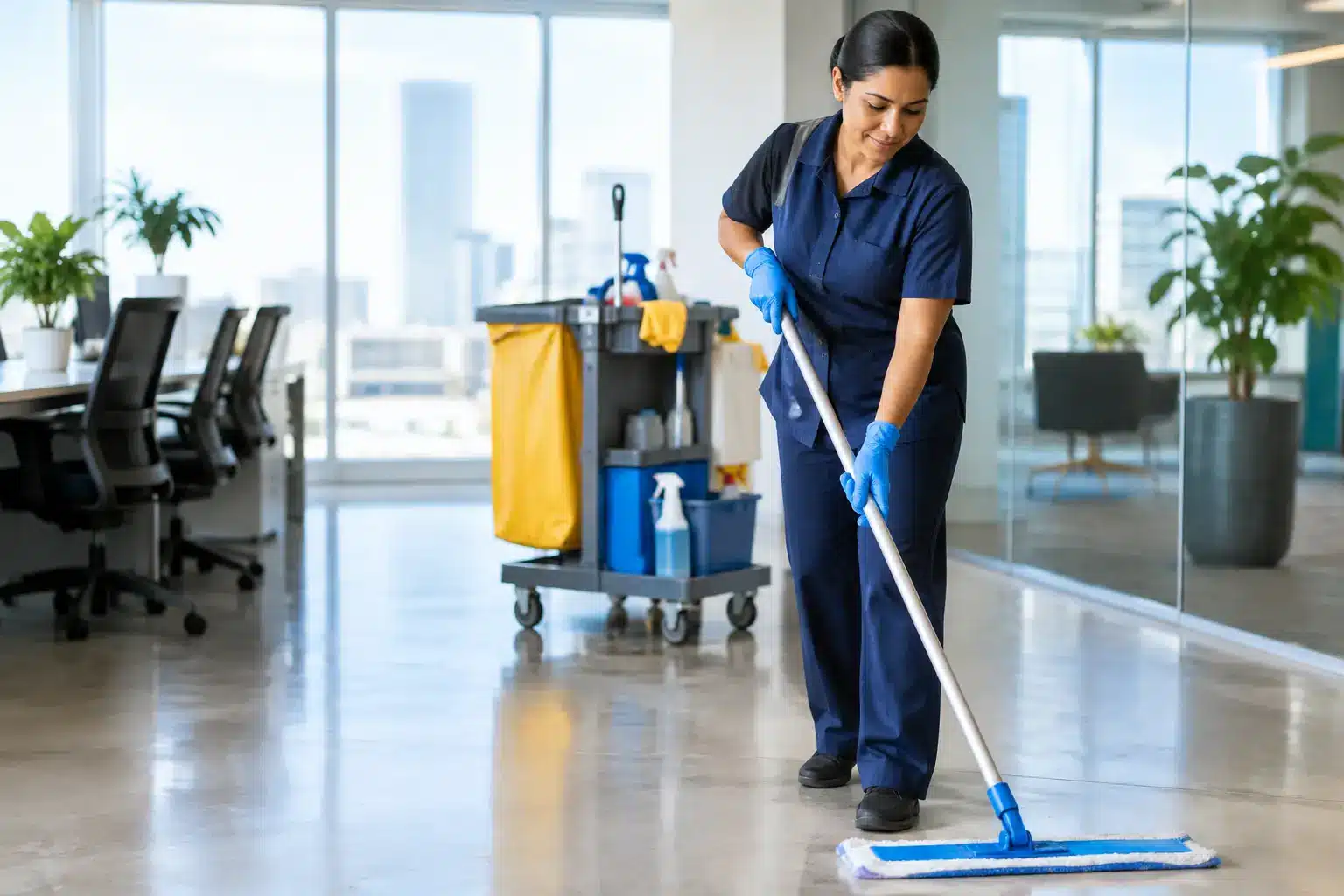
Finish with the floor. Sweep or collect loose debris before mopping, then mop from the farthest point toward the exit. Corners, the area around toilet bases, and the space below sinks deserve special attention. This is where dust, hair, moisture, and residue often accumulate.
Let the Sanitizer Do Its Job
One of the most common cleaning mistakes is wiping a sanitizer or disinfectant away immediately. Every product has a required contact time, sometimes called dwell time. The surface must remain visibly wet for that amount of time for the product to work as intended.
Read the label for the correct dilution, application method, approved surfaces, and contact time. Some products require rinsing on food-contact surfaces, though that is less common in a restroom. Others can damage natural stone, unsealed surfaces, or certain metals. If your office has specialty finishes, use a compatible product and test it in an inconspicuous area when needed.
Good ventilation also matters. Run the bathroom exhaust fan if available and avoid overspraying products into the air. A clean restroom should smell neutral and fresh, not heavily perfumed. Strong fragrance can mask an underlying issue, such as a drain odor or poor ventilation, without actually resolving it.
Focus on the Surfaces People Touch Most
Office bathrooms have predictable high-touch points. These should receive attention at every routine service and more often during periods of heavy traffic, cold and flu season, or an illness outbreak. The key areas include door handles, stall latches, toilet flush controls, faucet handles, soap dispensers, hand dryer buttons, paper towel levers, light switches, and grab bars.
For a small office with low daily traffic, a thorough daily cleaning with touchpoint checks may be enough. A larger office, medical-adjacent setting, coworking space, or public-facing workplace may need restroom touch-ups several times per day. There is no single schedule that fits every building. Foot traffic, restroom size, the number of fixtures, and whether clients use the space should guide the frequency.
A simple inspection log can help property managers and office administrators identify patterns. If paper towels run out every afternoon or a particular restroom needs extra attention after lunch, the service schedule can be adjusted before it becomes a complaint.
Do Not Overlook Odor and Moisture Control
Persistent restroom odor is rarely solved by air freshener alone. It may point to full trash, wet floors, dirty floor drains, buildup beneath toilet rims, leaking fixtures, or a ventilation problem. Address the source first, then use modest odor-control measures if needed.
Moisture deserves the same attention. Wet floors increase slip risks and create an unwelcoming appearance. Wipe splashes from counters, dry the floor around sinks and toilets, and report plumbing leaks promptly. If grout, caulk, or wall areas show ongoing discoloration, it may be time for deeper cleaning or maintenance rather than another round of surface sanitizing.
Train Staff and Keep the Process Consistent
Whether bathroom care is handled by an in-house employee or a commercial cleaning team, clear training protects people and improves results. Staff should understand chemical labels, safety data procedures, proper glove use, cross-contamination prevention, and how to respond to spills or bodily-fluid incidents. OSHA-informed safety practices are especially valuable when work involves chemicals, sharps risks, or contaminated materials.
Consistency also means using the right tools in the right place. Restroom equipment should not travel into break rooms or desk areas. Microfiber cloths and mop heads should be changed or laundered regularly, because a soiled tool can spread residue instead of removing it.
A professional cleaning provider can bring useful structure to this work, including screened staff, insured operations, workers’ compensation coverage, documented processes, and a customized schedule. For Madison-area offices, Class A Cleaning can tailor restroom service around your traffic patterns, building needs, and preference for thoughtful green cleaning products.
A well-sanitized office bathroom does more than meet a checklist. It gives employees a cleaner place to reset during the day and reassures visitors that the details of your workplace are being cared for. Set a routine, review it as your office changes, and schedule the level of service your facility actually needs.
Content Disclaimer: This article is part of Class A’s ongoing SEO and digital marketing campaign. We make every effort to keep the information accurate and current. If you find outdated or incorrect information, please contact us so we can review and update it.