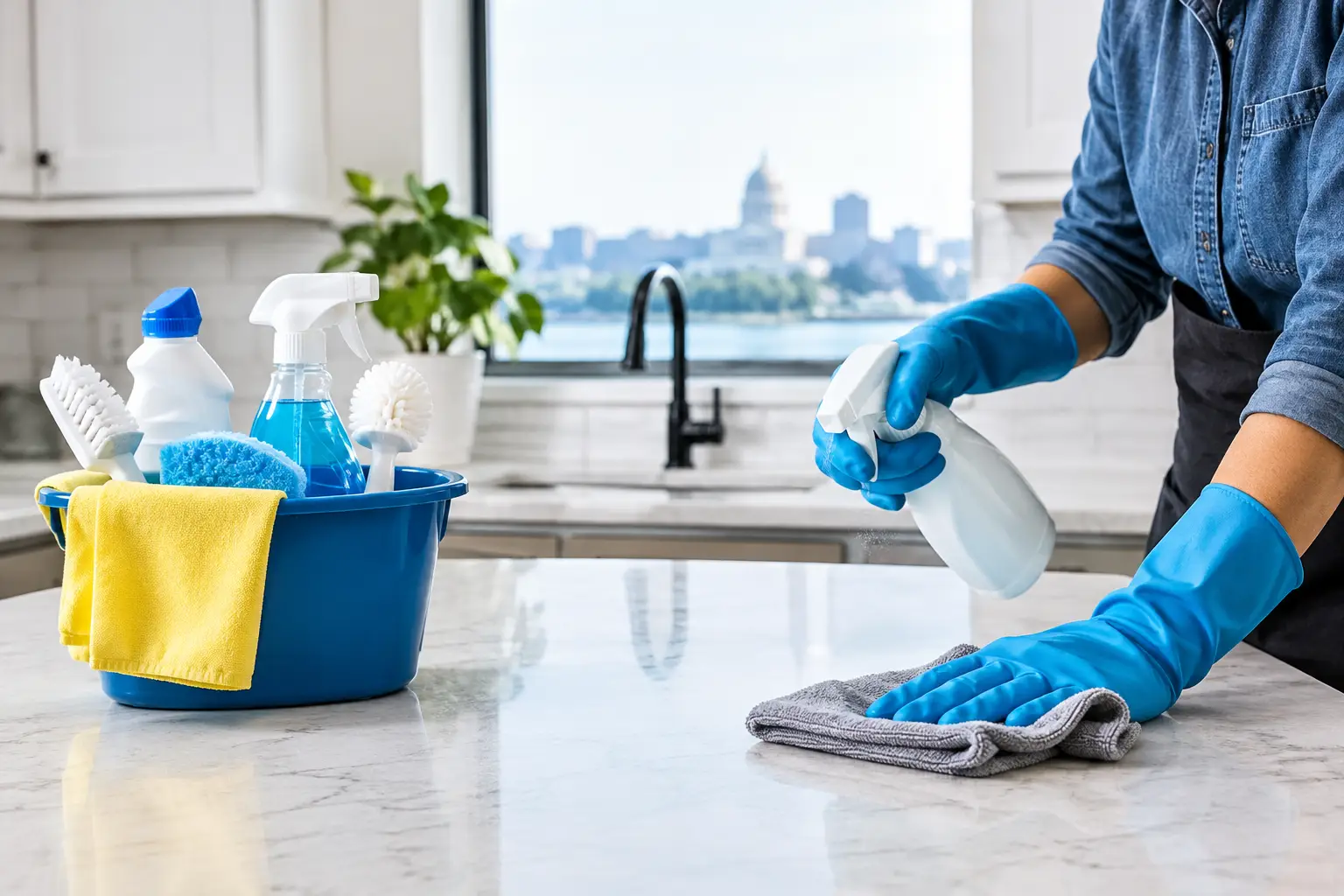
A kitchen counter can look spotless while the refrigerator handle, light switch, phone, and faucet lever receive far more hands than attention. To disinfect high touch surfaces effectively, the goal is not to treat every room like a hospital. It is to focus on the places people contact repeatedly, use the right product correctly, and build a routine your household or workplace can maintain.
For Madison-area homes, offices, rental properties, and shared spaces, a thoughtful approach protects the people who use the space without creating unnecessary odors, residue, or damage to finishes.
What Counts as a High-Touch Surface?
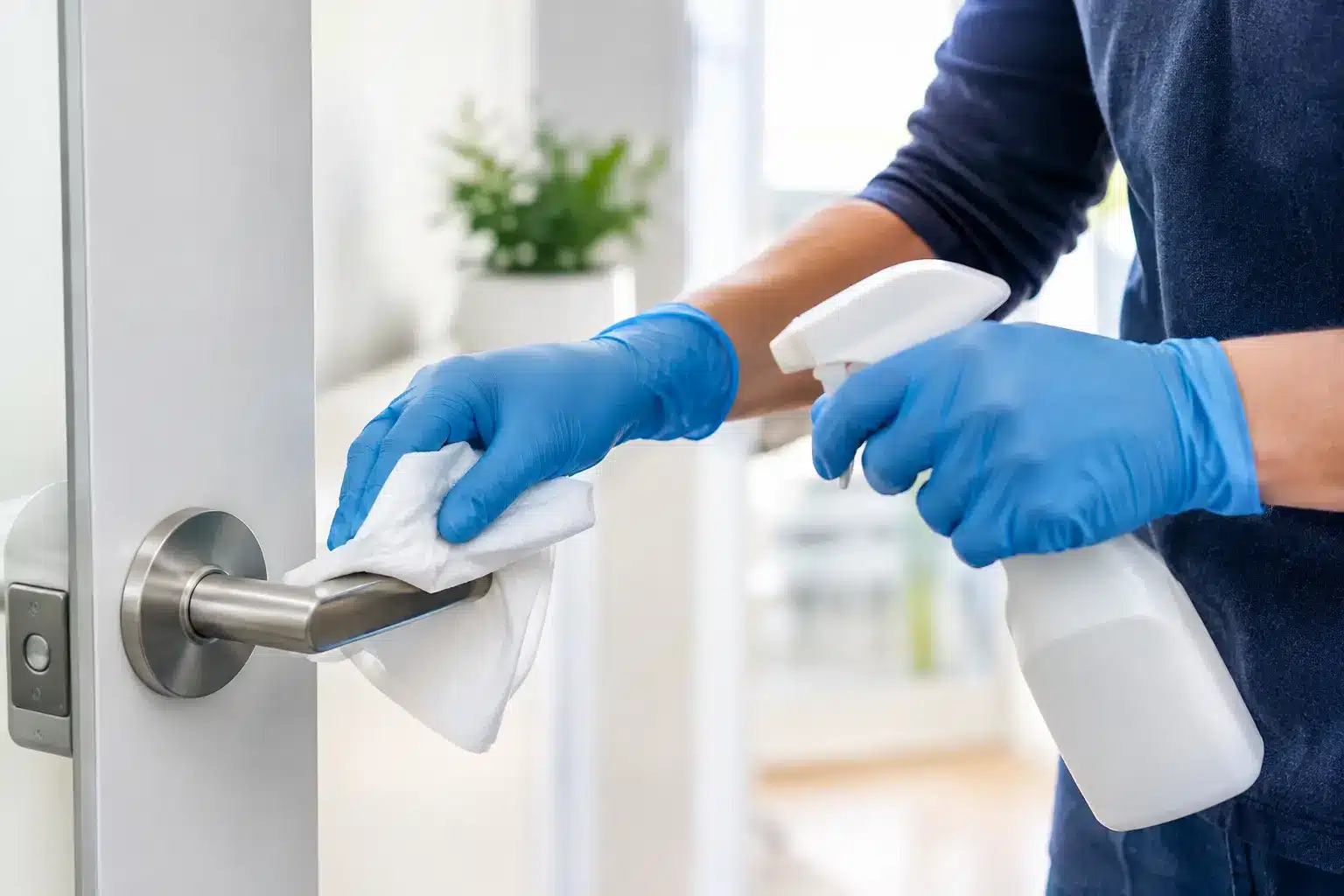
High-touch surfaces are the objects and fixtures that are handled often, especially by more than one person. In a home, that may mean doorknobs, cabinet pulls, appliance handles, remotes, faucets, toilet flush levers, stair rails, keyboards, and phones. In offices and commercial spaces, add shared desks, breakroom equipment, elevator buttons, point-of-sale terminals, conference-room controls, and entry doors.
The right priorities depend on how a space is used. A remote worker in a one-person home may focus on a keyboard, phone, bathroom fixtures, and kitchen handles. A busy family with children or pets may need more frequent attention on bathroom touchpoints, light switches, and shared electronics. An office with visitors has a different set of needs than a closed workspace used by the same small team each day.
That distinction matters. Over-cleaning every wall, shelf, and decorative item wastes time and product. Consistently addressing the surfaces people actually touch makes a bigger difference.
Clean First, Then Disinfect
Cleaning and disinfecting are related, but they are not interchangeable. Cleaning removes visible soil, crumbs, grease, dust, and some germs from a surface. Disinfecting uses an appropriate product to kill or inactivate certain germs listed on that product’s label.
If a surface is visibly dirty, clean it first with soap and water or a suitable all-purpose cleaner. Dirt and residue can prevent a disinfectant from making proper contact with the surface. This is especially common on kitchen handles, bathroom faucets, and breakroom appliances.
Then apply the disinfectant according to the label directions. The most commonly missed step is contact time. A product may need to remain visibly wet for a stated number of minutes before it can be wiped away or allowed to air dry. Spraying and immediately wiping may leave the surface clean-looking, but it may not deliver the disinfection result the label describes.
Use separate cloths or disposable towels for different areas when possible. A bathroom cloth should not travel to the kitchen, and a cloth used on a toilet handle should never be used on a desk or countertop. Wash reusable microfiber cloths after use and allow them to dry fully.
Choose Products That Fit the Surface and the Space
A disinfectant should be selected for both effectiveness and practicality. Check the label for the surfaces it can be used on, its required contact time, dilution instructions, and whether rinsing is needed. A food-prep surface may need a rinse after disinfection, while electronics require a product that will not leave excess moisture behind.
Avoid assuming that a stronger smell means a better result. Strong fragrances can be unpleasant for employees, residents, children, pets, and people with sensitivities. They also do not replace correct technique.
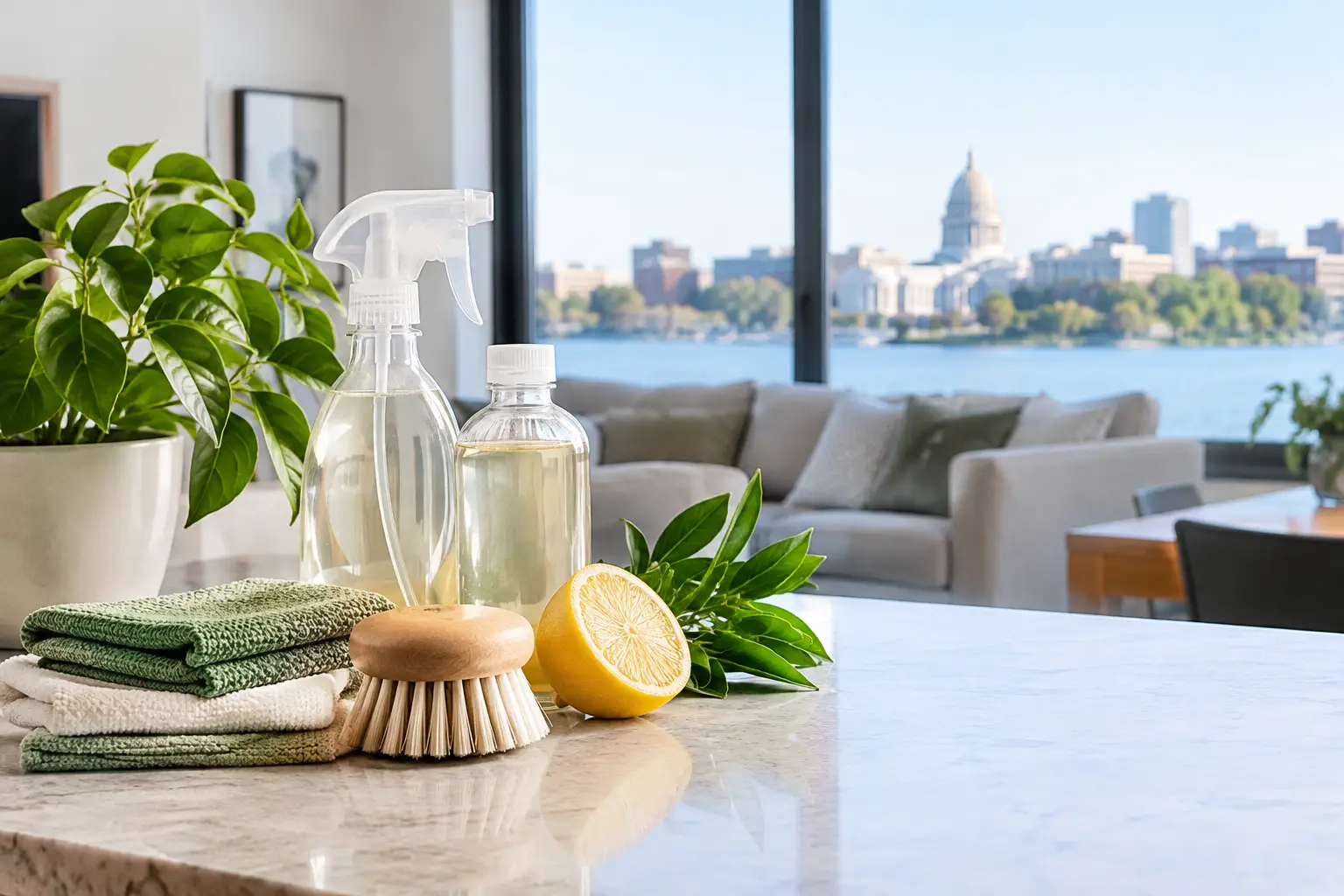
For homes and workplaces that prioritize a lower-impact cleaning approach, green cleaning products can be an excellent choice for routine soil removal. However, not every general-purpose green cleaner is also a disinfectant. When disinfection is needed, use a product specifically labeled for that purpose and follow its directions. The safest routine is often a combination of frequent cleaning and targeted disinfection rather than relying on harsh chemicals everywhere, every day.
Be careful with delicate materials. Natural stone, unfinished wood, leather, painted surfaces, and certain metals can stain, dull, or corrode when exposed to the wrong chemical. Test a small, inconspicuous area first when you are unsure. Never mix cleaning products, particularly products containing bleach, ammonia, acids, or other active ingredients.
A Practical Routine for Homes
For most households, high-touch disinfection works best as part of regular cleaning rather than as an exhausting daily project. During a normal week, clean common touchpoints whenever they are visibly soiled and disinfect them after illness, when someone in the household has been caring for a sick person, or following periods of frequent guests and activity.
Start at the entryway and move through the home in one direction. Wipe door handles, lock hardware, light switches, and railings. In the kitchen, focus on refrigerator and microwave handles, cabinet pulls, faucet handles, and trash-can lids. In bathrooms, give special attention to faucets, toilet flush levers, drawer pulls, and light switches.
Phones, tablets, keyboards, and remote controls are easy to overlook because they travel from room to room. Power electronics down when appropriate, use only the amount of product recommended for the device, and avoid soaking ports or openings. A lightly dampened disinfecting wipe may be suitable for many devices, but always follow the manufacturer’s care guidance.
If someone is ill, increase attention to their bathroom, bedroom touchpoints, bedside surfaces, and shared items. Use gloves if needed, wash hands after removing them, and launder linens and reusable cleaning cloths promptly. Good handwashing and regular ventilation remain valuable partners to surface care.
How to Disinfect High Touch Surfaces at Work
Workplaces need a clear, repeatable standard. Employees should know which shared areas receive attention, who is responsible, and how often the work is completed. Without a plan, the same visible lobby table may get wiped several times while shared breakroom handles and conference-room controls are missed.
For a typical office, daily attention to entry doors, restroom fixtures, breakroom touchpoints, shared equipment, and common-area controls is a sensible starting point. High-traffic retail counters, apartment common areas, and reception desks may require service more often. The best frequency depends on foot traffic, the number of shared users, the type of business, and whether illness is circulating among staff or visitors.
A simple written checklist can help maintain consistency across shifts. It should identify the surface, the approved product, required contact time, and the person or team responsible. This protects cleaning quality and makes expectations clear for property managers and business operators.
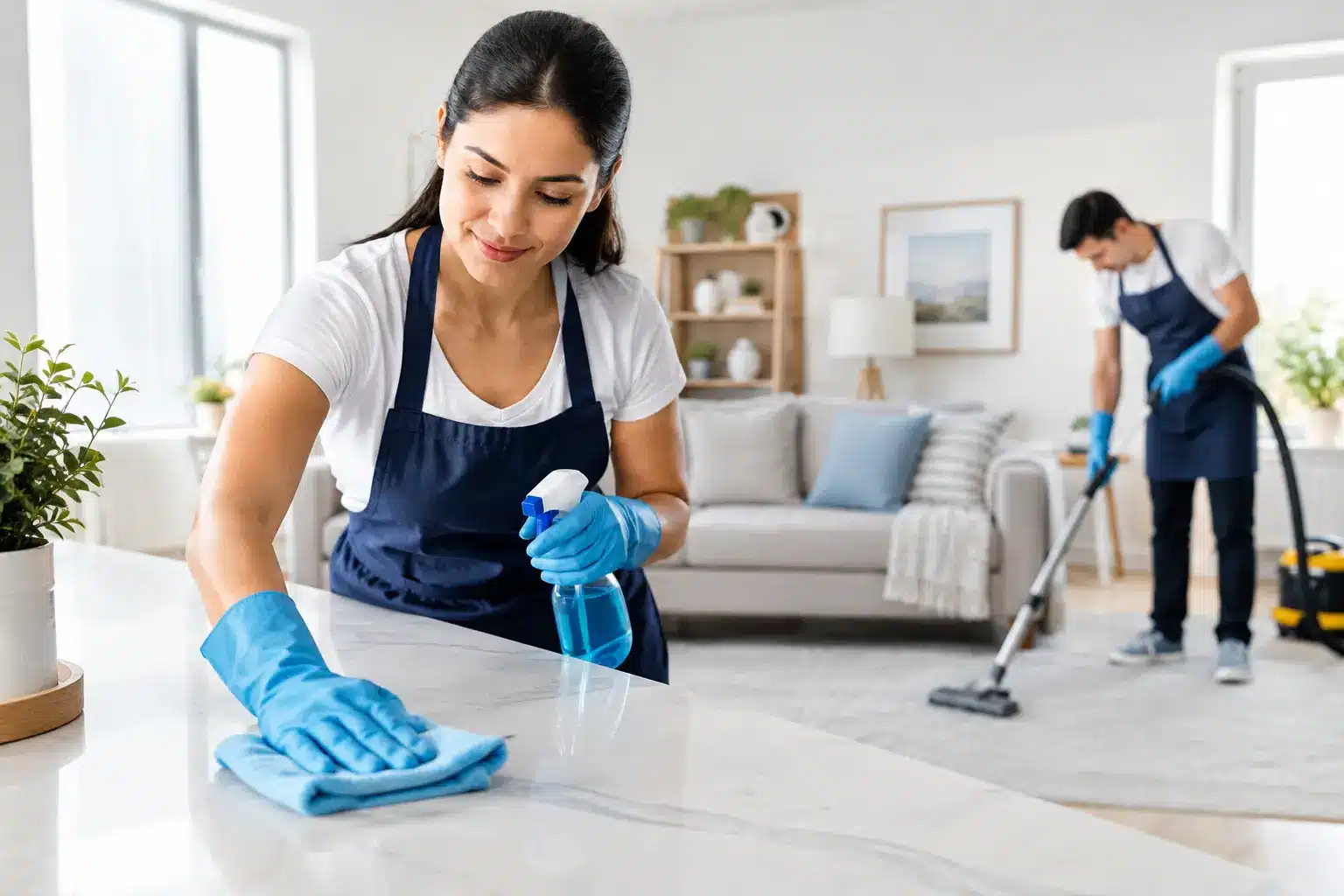
Professional cleaners also bring an advantage that is easy to underestimate: process. Screened, insured teams with OSHA training understand how to work safely around chemicals, wet floors, occupied offices, and sensitive equipment. For facilities with several restrooms, high visitor traffic, or custom needs, a tailored scope is more reliable than asking staff to fit detailed cleaning into an already full day.
Common Mistakes That Reduce Results
The biggest mistake is treating disinfection as a quick spray-and-wipe task. Products need the correct concentration and contact time to work as intended. Using too little product, drying it too soon, or applying it over visible grime can reduce effectiveness.
Another issue is using one cloth throughout an entire space. This can transfer soil from a restroom to another surface rather than removing it. Color-coded cloths or a clear order of operations can prevent cross-contamination.
Finally, do not forget the surfaces that look clean because they are touched constantly: keypads, drawer pulls, chair arms, shared pens, appliance buttons, and thermostat controls. A regular walkthrough from the user’s point of view often reveals what a cleaning checklist missed.
A clean, cared-for space helps people feel comfortable, whether they are arriving home after a long day or walking into an office ready to work. If your Madison-area home or facility needs dependable support, Class A Cleaning can build a customized plan that covers the details without cutting corners. Schedule your cleaning today and give the most-used parts of your space the attention they deserve.
Content Disclaimer: This article is part of Class A’s ongoing SEO and digital marketing campaign. We make every effort to keep the information accurate and current. If you find outdated or incorrect information, please contact us so we can review and update it.