Soap scum can make a freshly cleaned bathroom look dull again within days. That cloudy film on shower doors, tile, faucets, tubs, and sink basins is especially frustrating because it does not come off with a quick wipe. To eliminate bathroom soap scum effectively, you need to address what it is made of, use the right amount of cleaning power for the surface, and build a few small habits into your routine.
For Madison-area homes with hard water, the problem can be more noticeable. Minerals in water combine with soap residue, body oils, and product buildup to create a waxy layer that clings to bathroom surfaces. The good news is that regular, thoughtful care can restore the shine without relying on unnecessarily harsh products around children, pets, or sensitive finishes.
What Soap Scum Is and Why It Keeps Returning
Traditional bar soap often reacts with minerals such as calcium and magnesium in hard water. The resulting residue sticks to shower walls and fixtures, then catches shampoo, conditioner, skin oils, and everyday dust. Liquid body wash can leave buildup, too, particularly if it contains moisturizing oils.
A shower door may look cloudy because of soap scum, mineral deposits, or both. The difference matters. Soap scum usually feels slightly waxy or greasy, while hard-water scale can feel rough and chalky. Many bathrooms have a combination of the two, which is why a basic all-purpose spray may not make much of a difference.
Humidity adds another challenge. When water remains on tile, glass, grout, and caulk after a shower, residue has time to settle and harden. A bathroom that is used by several family members can develop buildup quickly, even when it is cleaned regularly.
How to Eliminate Bathroom Soap Scum Without Damaging Surfaces
Start by identifying the surface before choosing a cleaner. Glass shower doors, ceramic tile, porcelain tubs, fiberglass surrounds, natural stone, and chrome fixtures do not all tolerate the same products. A solution that works beautifully on glazed tile may etch stone or dull a delicate finish.
For most ceramic tile, porcelain, fiberglass, and glass, begin with a non-toxic bathroom cleaner designed to break down soap and mineral residue. Apply it generously enough to keep the area wet, then give it several minutes to work. The contact time is often more valuable than aggressive scrubbing. Cleaning too quickly is one reason soap scum seems impossible to remove.
Use a non-scratch sponge, microfiber cloth, or soft-bristle brush to loosen the film. Work from the top of the shower downward so the cleaner and residue do not drip onto an area you have already finished. For textured tile or grout lines, a small brush can reach the uneven areas where buildup collects.
Rinse thoroughly with warm water and dry the surface with a clean microfiber cloth. Drying is not an extra cosmetic step. It removes the mineral-laden water droplets that would otherwise become the next layer of cloudy buildup.
A careful approach for shower doors
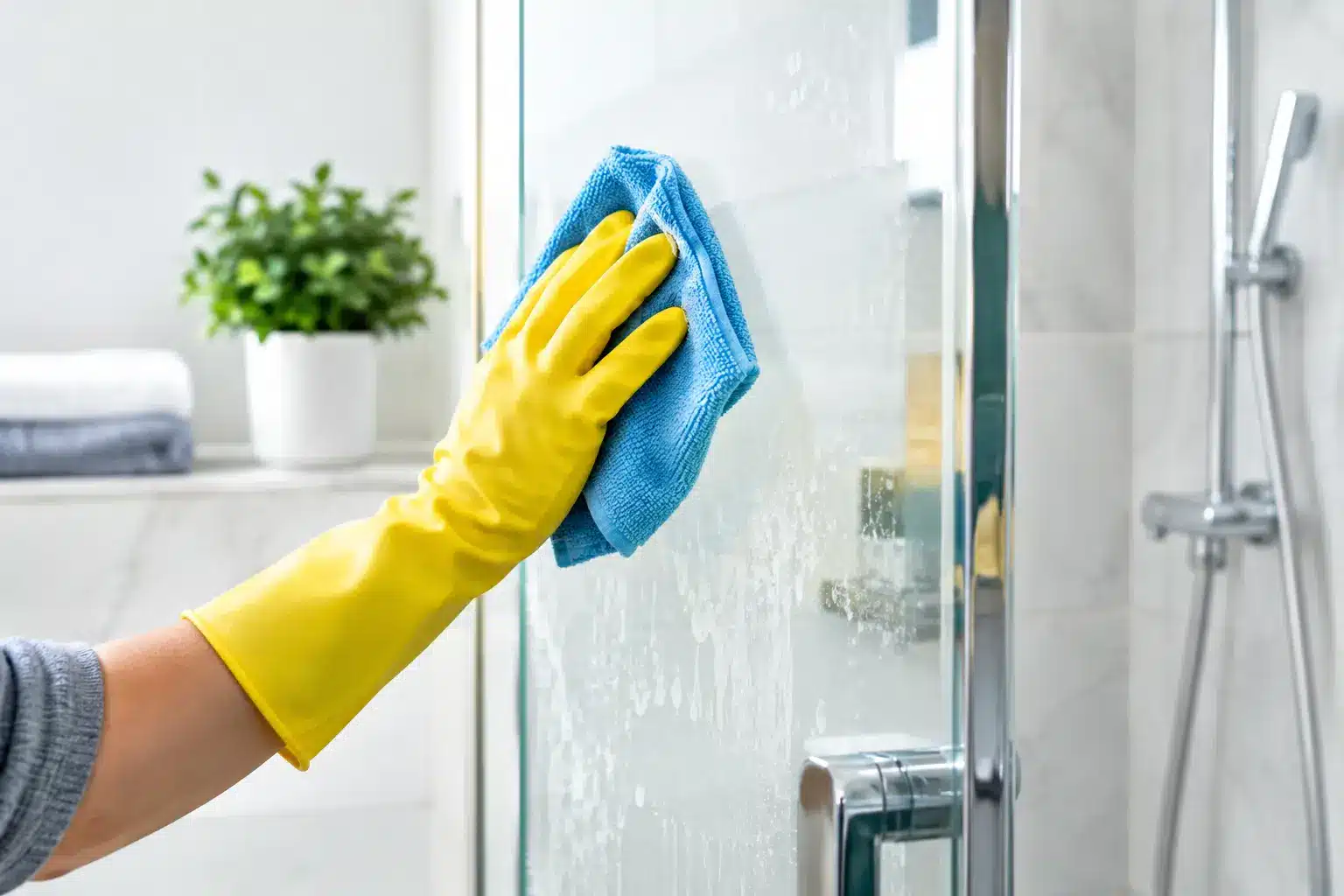
Glass shower doors need patience, especially when buildup has been sitting for weeks or months. Apply a glass-safe cleaner that can handle bathroom residue, allow it to dwell, then wipe in overlapping sections. A microfiber cloth works well for the final polish because it lifts residue instead of simply moving it around.
Avoid using razor blades, steel wool, or highly abrasive pads on shower glass. They can leave scratches that catch more residue over time. If the door remains hazy after cleaning, the issue may be etched mineral damage rather than removable soap scum. In that case, continued heavy scrubbing can make the appearance worse.
Tubs, surrounds, and sinks need gentler tools
Fiberglass and acrylic tubs can scratch more easily than they appear to. Use a soft sponge or nylon brush, not scouring powder or abrasive scrub pads. If residue is stubborn, repeat a gentle cleaning treatment rather than escalating immediately to harsh chemicals.
Porcelain and ceramic surfaces are generally durable, but chrome faucets and drain trim deserve extra care. Spray cleaner onto a cloth when working around fixtures, wipe the surface, then rinse and dry it. Leaving acidic or alkaline cleaner sitting on metal can affect its finish over time.
Be cautious with natural stone
Marble, travertine, limestone, and other natural stone surfaces need stone-specific, pH-neutral products. Vinegar, lemon juice, and many acidic bathroom cleaners can etch the surface, leaving dull marks that cleaning will not fix. If you are unsure what your countertop, tile, or shower surround is made of, treat it as a sensitive surface until you can confirm otherwise.
Common DIY Methods: What Works and When
Some homeowners reach for vinegar because it can help dissolve mineral deposits. On compatible non-stone surfaces, a diluted vinegar solution may be useful for light hard-water buildup. However, it is not the right answer for every bathroom, and its strong odor is not ideal for everyone.
Baking soda can provide mild scrubbing action when made into a paste, but it should be used sparingly. It is better for a small stubborn spot than for routine scrubbing across a whole shower. Repeated abrasion can dull glossy surfaces and wear down protective finishes.
Dish soap is sometimes useful because it cuts through oily residue. It may help with fresh soap scum on a tub or shower wall, but it does not fully address heavy mineral scale. It can also leave its own film if it is not rinsed completely.
Never mix cleaning products. In particular, bleach should not be combined with vinegar, ammonia, or other cleaners. Mixing products can create dangerous fumes and does not make the cleaning job more effective. Use one product at a time, follow its directions, and keep the room ventilated.
The Small Habits That Keep Soap Scum Away
Deep cleaning removes current buildup, but prevention is what keeps a bathroom looking consistently cared for. The most effective maintenance routine is usually simple enough to follow after each shower.
Keep a squeegee in the shower and pull water from glass doors and smooth wall surfaces after bathing. It takes less than a minute, but it prevents droplets from drying into mineral spots. If a squeegee is not practical for everyone in the household, wiping the glass and fixtures with a microfiber cloth is still helpful.
Run the exhaust fan during showers and for at least 20 minutes afterward. Better airflow helps surfaces dry faster and reduces the damp environment that encourages residue, mildew, and musty odors. If your bathroom does not have a fan, opening a window when weather allows can make a difference.
A quick weekly wipe-down prevents soap scum from hardening into a tougher job. Focus on the areas that collect the most product and water: the lower shower walls, tub ledges, door tracks, faucet handles, and the area around the drain. For households with several showers a day, twice-weekly maintenance may be a better fit.
Product choices can also affect buildup. If bar soap leaves a heavy film in your shower, switching to a liquid cleanser may reduce it. This is not a guarantee, since water minerals and body products still play a role, but it can make maintenance easier.
When It Is Time for a Professional Deep Clean
A bathroom may need more than routine cleaning when soap scum has become thick, fixtures remain dull after careful wiping, or shower tracks and grout have accumulated residue in hard-to-reach places. Move-in, move-out, post-construction, and seasonal deep cleans are also common times to give bathrooms extra attention.
Professional cleaning can be especially helpful for busy households, property managers preparing a unit, and homeowners who want a consistent recurring schedule. A trained cleaning team should use appropriate products and tools for the materials in your bathroom, rather than taking a one-product-fits-all approach. That attention protects surfaces while delivering a more polished result.
Class A Cleaning brings a detailed, family- and pet-conscious approach to homes and properties throughout the greater Madison area. Customized cleaning plans can include the bathroom tasks that make the biggest difference for your household, whether that means recurring upkeep or a more thorough reset.
A clean bathroom should feel like one less thing demanding your time. Treat soap scum early, dry surfaces often, and choose cleaning methods that respect the finishes in your home. When the buildup has outgrown a quick weekly wipe, schedule your cleaning today and let a dependable team clean the corners that are easiest to miss.
Content Disclaimer: This article is part of Class A’s ongoing SEO and digital marketing campaign. We make every effort to keep the information accurate and current. If you find outdated or incorrect information, please contact us so we can review and update it.