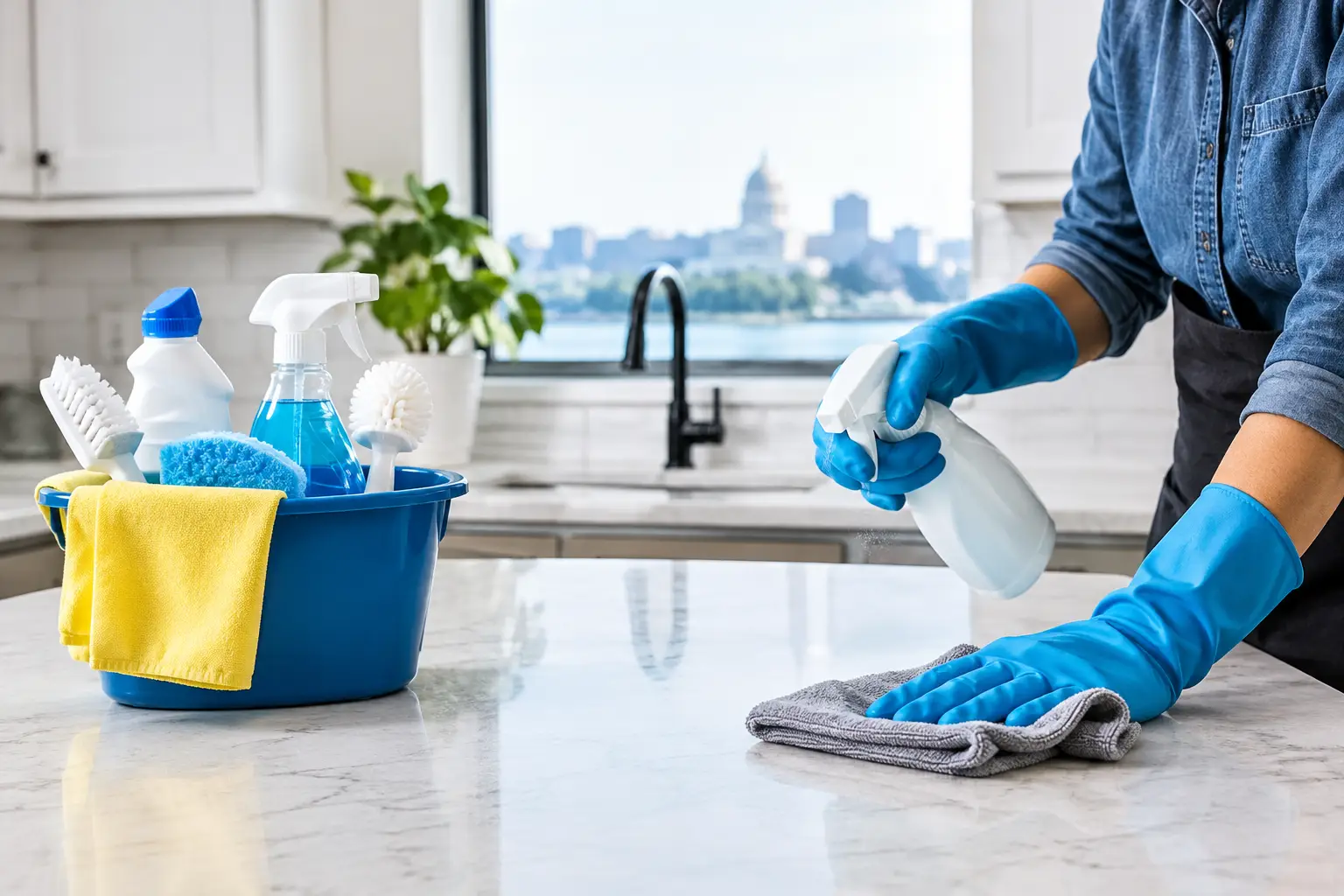
A clean facility or home should not depend on crossed fingers and vague promises. Cleaning contracts give Madison property managers, business owners, and recurring home-cleaning clients a clear picture of what will be cleaned, when service will happen, who is responsible, and how concerns will be handled.
For some clients, a contract is a formal document for ongoing commercial or janitorial service. For others, it is a customized service agreement confirming a recurring home-cleaning plan. Either way, the purpose is the same: protect the client, support the cleaning team, and prevent small misunderstandings from becoming frustrating problems.
Why Cleaning Contracts Matter
The right cleaning arrangement makes service more dependable because expectations are documented before the first visit. A business can confirm that restrooms, entryways, break rooms, floors, and high-touch surfaces receive attention at the right frequency. A homeowner can verify whether a recurring visit includes kitchen cleaning, bathroom sanitizing, dusting, vacuuming, mopping, and other priority tasks.
Written expectations also make it easier to adjust service as needs change. An office may add extra cleaning during a busy season, after an event, or when staffing levels increase. A family may need more frequent attention before hosting guests, after a move, or when work and school schedules become especially demanding.
A good agreement is not about making service rigid. It creates a dependable baseline, then leaves room for reasonable communication and customization.
What to Look for in Cleaning Contracts
Not every cleaning contract needs to be lengthy, but it should be specific. The more clearly the service provider and client define the work, the easier it is to deliver consistent results.
A detailed scope of work
The scope of work is the heart of the agreement. It identifies the spaces included and the tasks expected during a standard visit. For commercial clients, this may cover offices, lobbies, conference rooms, restrooms, staff areas, trash removal, floor care, and interior glass. Apartment communities may need common-area cleaning, turnover support, or customized plans for individual units.
For residential clients, the scope may distinguish between routine cleaning, deep cleaning, move-out cleaning, and one-time service. A standard recurring visit is often designed to maintain a clean, comfortable home. A deep cleaning may include additional detail work such as baseboards, cabinet fronts, buildup removal, and more thorough attention to neglected areas.
The agreement should also explain what is not included. Exterior windows, organizing personal belongings, lifting heavy furniture, hazardous-material cleanup, and specialty restoration work may require separate planning or pricing. Clear exclusions are not a lack of service. They are a practical way to set safe, honest expectations.
Service frequency and scheduling
Frequency should match the building, the household, and the level of use. A busy medical-adjacent office, high-traffic retail setting, or multi-tenant property may require service several times a week. A smaller office may be well served by weekly or bi-weekly janitorial cleaning. Homes may benefit from weekly, bi-weekly, or monthly service depending on family size, pets, allergies, entertaining, and personal preferences.
The agreement should state the planned service day or service window, along with the process for holidays, weather disruptions, building closures, and rescheduling. Flexibility matters, especially in Wisconsin, where winter weather can occasionally change a normal routine. Still, flexibility works best when both sides understand how changes will be communicated.
Pricing and approval for extra work
A professional agreement should explain the pricing structure. That may be a flat rate per visit, an hourly rate, a monthly service amount, or pricing based on square footage and task requirements. Commercial work often depends on the size of the property, traffic patterns, restroom count, flooring types, service frequency, and supply needs.
Ask how additional work is approved. For example, post-event cleanup, interior refrigerator cleaning, carpet spotting, construction dust removal, or an unusually heavy mess may fall outside the regular scope. Clients should know whether the team will seek approval before performing billable extra work and how that approval will be documented.
Supplies, equipment, and green cleaning preferences
A contract should clarify who provides cleaning products, paper goods, liners, and equipment. In a commercial setting, janitorial supply needs can be part of the service plan or handled separately. That distinction helps property managers avoid surprise shortages in restrooms or break rooms.
For homes and businesses that prefer environmentally responsible service, ask what products will be used. Green cleaning should still be effective, especially in kitchens, restrooms, and high-touch areas. Class A Cleaning uses non-toxic, animal-testing-free products through its in-house green cleaning program, helping clients care for their spaces while considering children, pets, employees, and visitors.
If a household has allergies, a sensitive pet, a fragrance concern, or a product preference, mention it before service begins. The same applies to commercial clients with tenant requirements or facility policies.
Insurance, employee screening, and safety practices
Cleaning teams work in private homes, occupied offices, and active properties. That makes trust a central part of any service relationship. Before signing, clients should ask whether the company carries liability insurance and workers’ compensation coverage. These protections matter if an accident or property issue occurs during service.
It is also reasonable to ask how employees are screened, trained, and supervised. Commercial clients may need teams that understand access procedures, alarm protocols, keys, badges, visitor policies, and OSHA-informed safety practices. Homeowners deserve to know that the people entering their living spaces are professional, respectful, and prepared.
Safety requirements should be especially clear for post-construction cleaning. Construction cleanup can involve dust, debris, sharp materials, unfinished surfaces, and site-specific rules. A standard home-cleaning agreement is not a substitute for a plan built around those conditions.
Access, security, and communication
The agreement should state how the cleaning team will access the property. This may involve a key, lockbox, entry code, front-desk check-in, building access card, or a designated on-site contact. Commercial clients should identify restricted rooms, confidential areas, and any spaces that require advance permission.
Communication matters just as much. Identify the best contact for schedule questions, quality feedback, urgent requests, and billing. A reliable provider should welcome feedback, not make clients feel uncomfortable for asking questions. The goal is to resolve concerns early and maintain a clean space that reflects the client’s standards.
When a Long-Term Agreement Makes Sense
Cleaning contracts are most useful when service is recurring or when a property has multiple moving parts. Offices, apartment communities, retail spaces, and commercial buildings benefit from a documented routine because consistency affects employees, tenants, customers, and visitors every day.
For homeowners, recurring service can reduce the mental load of keeping up with routine cleaning. A scheduled plan means the kitchen, bathrooms, floors, and common spaces receive regular care without adding another major task to an already full week.
That said, a long-term arrangement is not always necessary. One-time cleaning, move-out cleaning, deep cleaning, and post-construction work may be better handled through a detailed estimate or project-specific service agreement. The right format depends on the job, not on a one-size-fits-all rule.
Questions to Ask Before You Sign
Before choosing a cleaning provider, ask how the scope of work is created, what happens when you need to reschedule, and how quality concerns are addressed. Confirm whether the team is insured, whether workers are covered by workers’ compensation, and whether staff receive safety training.
For commercial service, ask about quality checks, communication with building contacts, supply replenishment, and the process for adding seasonal or special services. For residential service, discuss pets, access instructions, fragile items, product preferences, and the areas that matter most to your household.
A provider should be able to answer directly and build a plan around your actual needs. The best cleaning contracts do not bury clients in fine print. They make professional service easier to understand and easier to rely on.
A clean space supports better workdays, more comfortable homes, and a stronger first impression for everyone who walks through the door. Start with a clear conversation, choose a scope that fits your property, and schedule your cleaning today with a team that treats the details with care.