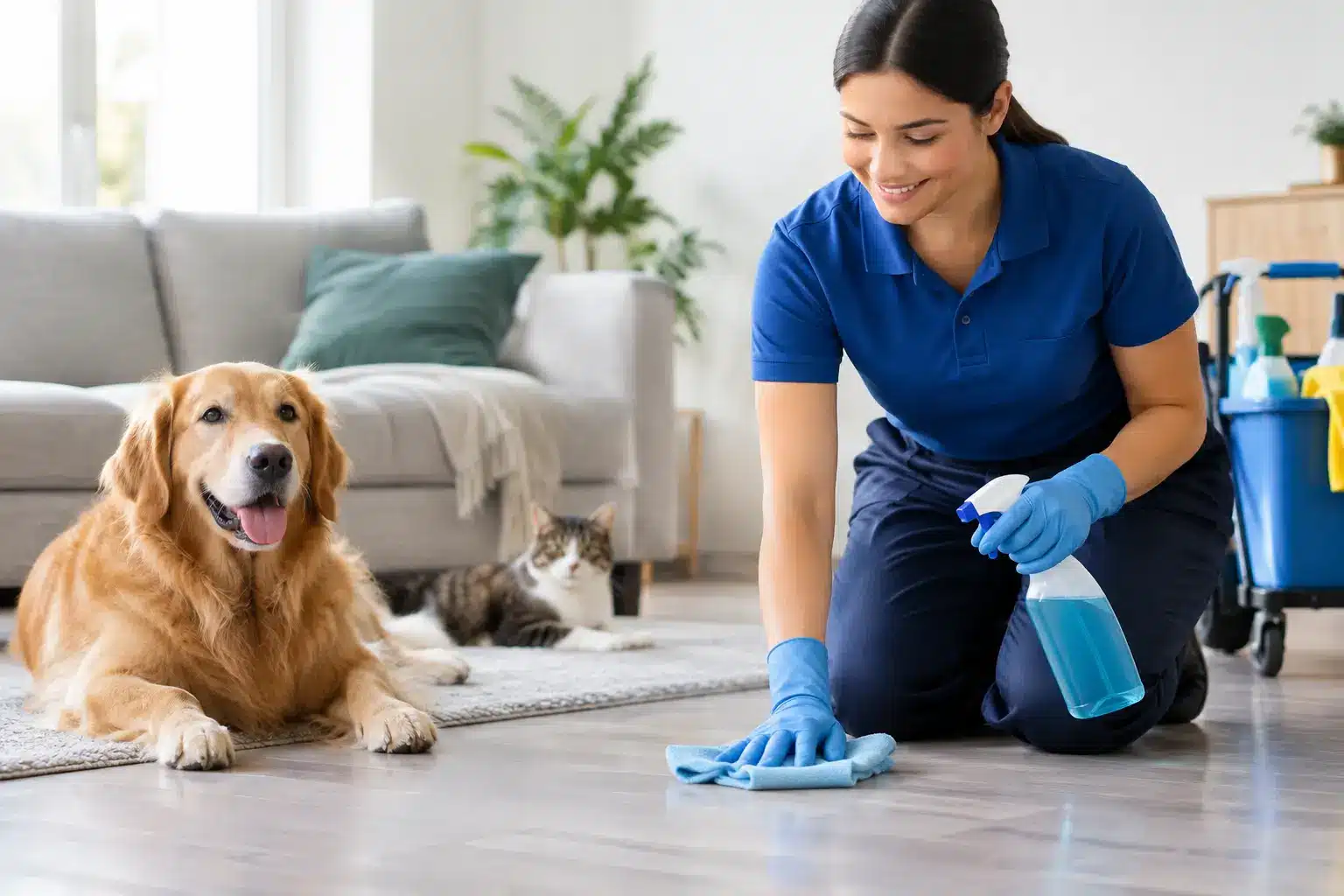
The doorbell rings, the vacuum comes out, and your dog decides a cleaning appointment is the most exciting event of the month. So, can cleaners work around pets? Yes — when the household, pet, and cleaning team have a clear plan. A professional cleaning visit does not have to disrupt your pet’s routine or compromise the careful standards you keep for their safety.
For many Madison-area households, pets are family members with strong opinions about strangers, sounds, and changes to their space. Some curl up through the entire appointment. Others bark at a mop bucket, hide under the bed, or become anxious when familiar rooms are rearranged. The right approach depends on your pet’s temperament, the service being performed, and honest communication before the cleaning team arrives.
Can Cleaners Work Around Pets Safely?
Cleaners can work safely in pet-friendly homes when they know an animal is present and receive any needed instructions in advance. That means identifying which pets will be home, whether they are comfortable with visitors, and which rooms or belongings require special care.
A calm cat may be perfectly content staying in a quiet bedroom while the rest of the home is cleaned. Meanwhile, a friendly dog may enjoy meeting the team before settling into a crate or gated area. Highly protective dogs, escape-prone cats, or pets that become stressed by noise may need to stay with a neighbor, at daycare, or in a separate closed room during the visit. There is no single correct arrangement. The safest choice protects both your pet and the people working in your home.
Professional cleaners should never assume a pet is comfortable simply because the animal is friendly with family. New people, cleaning equipment, unfamiliar scents, and activity throughout the house can change an animal’s behavior. Good planning respects that possibility rather than putting anyone in an uncomfortable situation.
Start With Clear Information Before Cleaning Day
The most useful pet-safety step happens before the appointment begins. Let your cleaning provider know what kind of pets you have, how many, and where they will be during service. Share practical details, not just general reassurance. If your dog bolts when an exterior door opens, say so. Should a cat hide in a closet that should not be disturbed, point that out. You should also mention any medical conditions, sensitivities, or history of anxiety.
It also helps to explain your preferred entry procedure. For example, you may want the team to enter through a particular door, keep a baby gate latched, or text before arrival so you can secure your pet. Small instructions can prevent a stressful moment and help the appointment begin smoothly.
When a pet will remain home, make sure the cleaning team has a safe way to distinguish pet belongings from items that can be moved. Water bowls, feeding areas, medication, litter boxes, aquariums, cages, and pet beds all deserve attention. Cleaners can work around these spaces, but they should not relocate medication, open enclosures, or handle animals unless you have specifically discussed it.
Make a Comfortable Space for Your Pet
A separate room is often the simplest option for dogs and cats that need quiet. Choose a room that is not included in the cleaning scope for that appointment, then provide water, a comfortable bed, and familiar toys. During longer deep-cleaning visits, consider whether your pet needs an outdoor break, food, medication, or a check-in from someone you trust.
Crates can work well for dogs that are already crate-trained and comfortable resting there. They are not a good last-minute solution for a dog that views a crate as punishment or panics when confined. Similarly, a closed bedroom may reassure one cat and upset another. Your knowledge of your pet matters most here.
Preparing Your Home for a Pet-Friendly Cleaning Visit
A little preparation lets the team focus on detailed cleaning instead of navigating avoidable hazards. Pick up small toys, chews, and loose pet accessories before the appointment. This protects the items and makes it easier to clean the floors beneath them. Put away treats that could distract a food-motivated dog, and secure trash cans if your pet is likely to investigate while cleaners move from room to room.
Birds, reptiles, fish, and small mammals also deserve consideration before service. These animals can be especially sensitive to noise, aerosols, drafts, and changes in temperature. Cages and tanks should remain secure, while the surrounding area should be cleaned with products and methods appropriate for the enclosure. In many cases, cleaning around the habitat rather than directly on it is the best approach.
For cats, check window screens, closet doors, and other potential hiding or exit points. Dog owners should make sure gates, leashes, and crate latches are working properly. A pet’s ability to slip through an open door can turn a routine cleaning visit into an emergency, so this quick check is worth making before the team arrives.
Pet-Safe Products Matter, but So Do Procedures
Pet-safe cleaning involves more than choosing a product labeled green. Products should be used according to their instructions, stored securely, and kept away from food and water dishes, toys, bedding, and animal enclosures. Floors and surfaces should also dry before pets walk, roll, or lick them.
At Class A Cleaning, our in-house green cleaning program uses non-toxic, animal-testing-free products selected with families and pets in mind. Even with safer products, cleaning teams should use thoughtful procedures. A pet may have allergies, respiratory sensitivity, or a habit of licking freshly cleaned surfaces. Sharing those details helps determine the right product choices and timing.
A strong scent is not proof that a surface is cleaner. In fact, heavily fragranced products may be unpleasant for pets and people alike. When scent sensitivity is a concern in your home, ask for a cleaning plan that accounts for it.
What Happens During the Appointment?
A professional team should follow the instructions you provided and treat your home as a shared space for people and animals. That includes keeping designated doors closed, watching for pets near entryways, and avoiding areas you have marked as off-limits. Cleaners should also be comfortable pausing work if a pet becomes distressed or a safety issue arises.
You can help by being realistic about what a pet allows. If a dog growls when strangers approach a certain room, that room may need to be skipped while the dog is home. Cats that hide beneath furniture should not be disturbed, even when cleaners need to work nearby. Thorough work never requires ignoring an animal’s signals.
For recurring service, the routine often becomes easier over time. Pets learn the sounds and rhythm of the visit, while the cleaning team learns your household’s preferences. A consistent schedule and customized cleaning plan can be especially helpful for pets that do better with predictability.
When It Is Better to Keep Pets Elsewhere
Some appointments call for a different arrangement. Deep cleaning, move-out cleaning, post-construction cleanup, or service in a home with multiple workers can bring more equipment, more movement, and longer work periods. Keeping an anxious pet elsewhere may be the kindest and safest choice.
The same is true for pets with a bite history, extreme fear of strangers, or medical needs that require close supervision. There is no judgment in arranging pet care during the appointment. It allows cleaners to complete the work efficiently while your pet stays calm in a familiar, appropriate setting.
If you are unsure, start with a smaller cleaning scope while you are home. This lets you see how your pet responds, identify any concerns, and adjust the plan before setting up recurring service. A provider that offers consultations and flexible scheduling should be willing to work through those details with you.
A Cleaner Home Should Feel Better for Everyone
Professional cleaning can be particularly helpful in pet households. Regular attention to floors, upholstery, baseboards, and high-touch surfaces helps manage tracked-in dirt, fur, dander, and the everyday messes that come with active animals. Still, the goal is not simply a spotless room. It is a home that feels comfortable, cared for, and safe for every member of the household.
Before your next appointment, take a few minutes to share your pet’s routine, secure their space, and explain any special needs. That preparation gives your cleaner the information needed to work carefully, while it gives your pet the calm, predictable environment they deserve.
Content Disclaimer: This article is part of Class A’s ongoing SEO and digital marketing campaign. We make every effort to keep the information accurate and current. If you find outdated or incorrect information, please contact us so we can review and update it.